A Room by Room Window Treatment Guide for Mooresville Homes
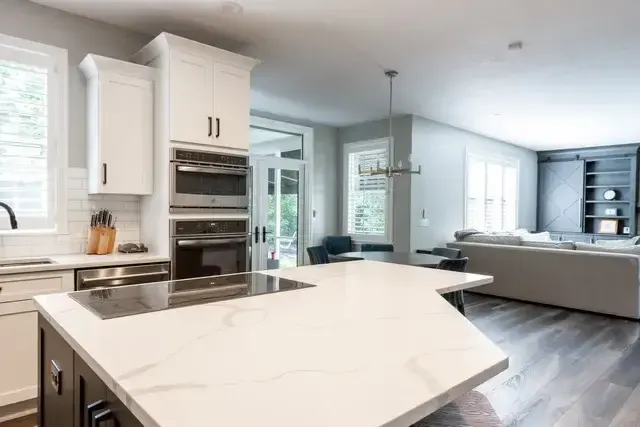
Most window treatment regrets are avoidable, and they tend to repeat across Mooresville homes in the same couple of ways: the wrong product picked for the room, and a measurement that only got taken once instead of three times. This guide walks through where those mistakes happen and how to skip past them, in the same order we'd flag them standing in your kitchen.
The Four Types of Window Treatments
Four categories cover almost every window, and the fastest way to choose is to rule three out. Blinds have hard slats or vanes that tilt for light control; pick these when precise adjustment and a lower price matter most. Shades are one piece of material that rolls, stacks or folds, and they're the right call when a clean, simple look matters more than fine tuned light control.
Shutters are hinged louvered panels built into a frame, chosen when a homeowner wants something that reads as part of the house rather than an accessory, especially on a front room facing the street. Drapery is fabric on a rod beside the opening, and it's the pick when sound absorption or a softer look matters as much as light control. A Mooresville living room with hard floors and a wall of glass often ends up wanting drapery for exactly that reason.
Contracts and Custom Order Timelines
Custom fabrication usually runs two to five weeks from order to install, because nothing gets built until the factory has your numbers. If a house is getting done over several visits, order by room rather than by product type. Fabric gets dyed in batches, so two shades in the same color ordered months apart can read slightly different in afternoon light, and there's no fixing that after delivery.
Homeowners in Mooresville have one real protection worth knowing before signing anything. The state's Home Improvement Contract Act, IC 24-5-11, applies to residential work over $150 and requires a written contract with a real scope and a total price before work starts. Ask for it. A shop worth hiring in Mooresville hands it over unasked.
Read the scope before signing, not after. It should spell out the mount type for every opening and note which room each one is going in, rather than a lump sum for the whole house. Treat any price ranges you read, including the ones here, as national context rather than a quote for your specific house.
The four families solve different problems, and once you know which one you're actually shopping for, the rest of the decision moves fast. Mooresville Window Treatments will help you match the family to the room before talking fabric or color, and we're insured and bonded for the work itself. Call (317) 999-5154 and we'll walk through it together at your kitchen table in Mooresville.
How to Decide What Goes Where
Walk the house with a notepad and write down the problem in each room before writing down a product. Front rooms and anything visible from the street carry the exterior look, so they get decided together even when the rooms behind them get used differently; a single shutter or shade color across the front reads as one decision from the curb. Privacy there is usually a nighttime issue rather than a daytime one, which is why a top down bottom up cellular shade, covering the lower half of the glass while daylight comes over the top, is the most useful configuration most homeowners have never heard of.
Living rooms and great rooms in Mooresville usually have a glare problem instead: late day sun hitting a television is a solar shade job, sized by openness factor rather than by color. Kitchens want something wipeable, with the control kept away from the sink. Bedrooms are the one place blackout is worth the extra cost, though a true inside mount still leaves a thin line of light down each side.
Bathrooms and laundry rooms need a material that shrugs off steam, and a basement or utility window is fine with something modest so the budget can go where it actually shows.
What Happens at the In-Home Measure
A measure appointment runs about an hour, and it's where money gets saved or wasted on a custom order. The measurer takes width at the top, the middle and the bottom of each opening, and height at the left, center and right, then checks both diagonals for square. The narrowest width and shortest height govern an inside mount, and a shallow mounting depth pushes the job to an outside mount instead, which changes the material cost as well as the look.
What that hour actually buys is a job that doesn't get remade. When a homeowner measures and orders online, a bad number is the homeowner's cost to fix. When the company that measured it gets a number wrong, the remake is on them. That difference is most of what a measure is actually paying for, and it's worth asking about directly in Mooresville before signing anything.
What Drives the Price
The mistake that costs the most later is buying a stock blind trimmed down to fit and assuming it behaves like custom product. A trimmed headrail has had its internal mechanism shifted off center, and that's usually what fails first, sometimes within a couple of years. National ranges run roughly $60 to $600 a window for stock and $250 to $2,600 a window for custom, measured and installed in a Mooresville home, and the gap between them is mostly about what's inside the housing, not the fabric on the outside.
The other common mistake is upgrading fabric everywhere instead of upgrading mechanism where it actually matters. Cordless lift and motorization both change how a shade behaves day to day. A more expensive print does not.
Frequently Asked Questions
Should I do inside mount or outside mount?
Inside mount sits within the opening and shows off the trim, which looks cleaner and is what most people picture. It needs enough flat depth for the headrail, and it leaves a small light gap along each side because the product gets built slightly narrower so it can move. Outside mount sits on the trim or the wall above the opening instead. It covers more light and hides an opening that's out of square, which makes it the fallback whenever there isn't enough depth for an inside mount. Bedrooms often go outside; living spaces usually go inside.
What if my window opening isn't square?
It happens more than people expect, especially in an older home where the frame has shifted a little over the years. At the measure, both diagonals get checked corner to corner, and if they come out different, the opening is out of square. A straight-edged inside mount shade can leave a visible wedge of daylight along the top in that case. An outside mount usually solves it cleanly, since it covers the whole opening, crooked part included, instead of trying to fit inside it exactly.
What's the real difference between room darkening and blackout?
Room darkening fabric blocks most light through the material but still glows a little, and it's what most people actually want in a bedroom. Blackout fabric passes essentially nothing through the material itself. Neither one seals the edges, so on an inside mount you'll still see a thin line of light down each side. If a genuinely dark room is the goal, the fix is an outside mount that overlaps the trim, or side channels that capture the edges.
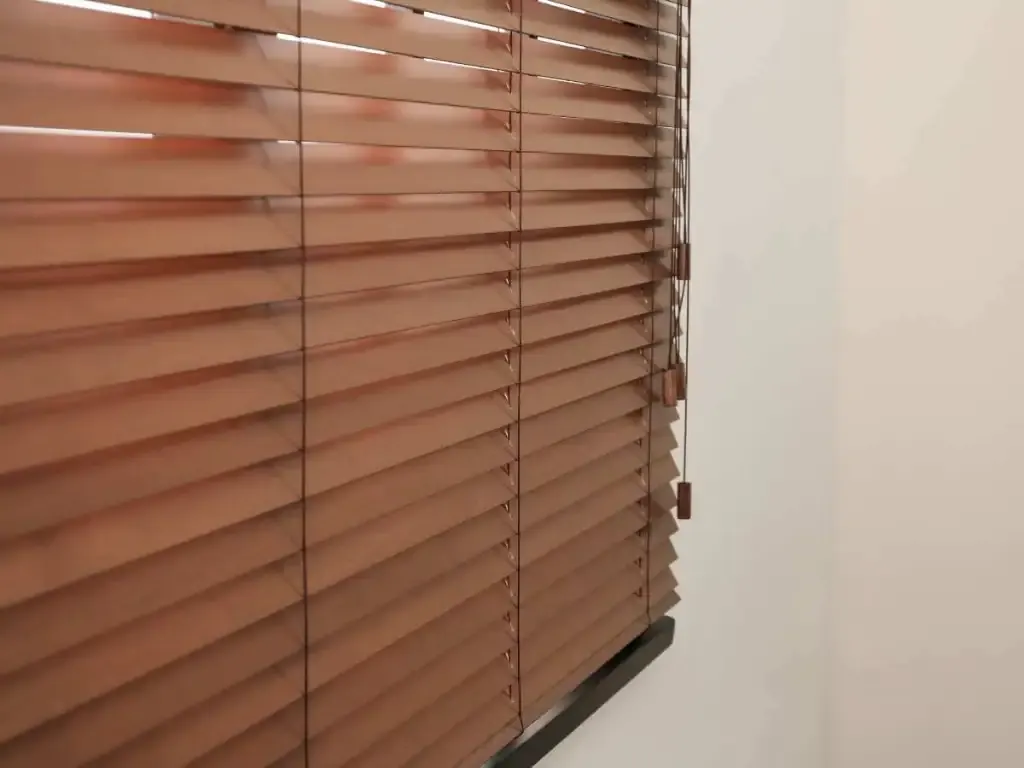 How to Childproof the Blinds You Already Have in Mooresville