What a Proper Measure Catches Before You Buy in Mooresville
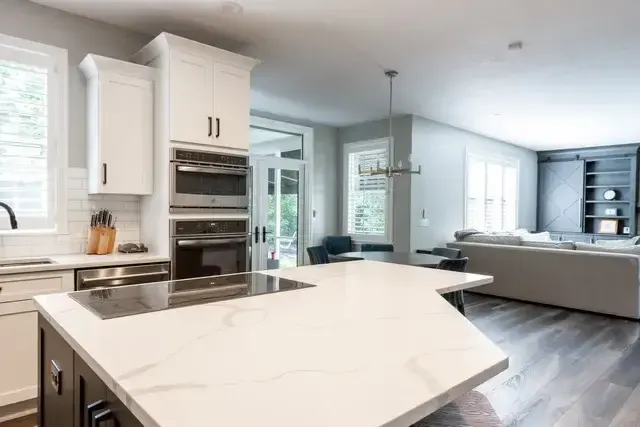
Plenty of advice about window coverings treats stock product as something to avoid. That is not honest. Stock is well made for what it is, and in some rooms it is clearly the right purchase. The trouble starts when a product built to a fixed size meets an opening that is not one. This is a room by room guide to where each answer belongs in a Mooresville house.
What Happens When a Stock Blind Gets Cut to Fit
An installer who has watched a lot of stock blinds fail over the years learns to see the cut coming from across the room. A shelf blind is built to fixed sizes, and the store's saw brings it down to the width somebody wrote on a slip of paper, typically to the nearest eighth of an inch. From that point on, the blind is a slightly different object than the one the manufacturer engineered.
The parts inside a headrail, the tilt gear and the lift system, plus the brackets, were positioned by the factory for a specific length. Shorten that length afterward and those parts sit somewhere new relative to the ends, while the ladder strings that hold each slat level stay exactly where they were originally spaced. That gap is where a cut down blind starts to show its age faster than a custom one built to size.
A measure exists to avoid this by working in the other direction: instead of cutting a fixed product down to an opening, it builds the product up to match the opening exactly, so nothing about the mechanism has to move from where it was designed to sit.
What a Proper Measure Actually Checks
The third mistake is treating a measure as a formality instead of the thing that actually prevents returns. A real measure checks width at three points on the opening and uses the narrowest, and checks height at three points and uses the shortest, because a single number from the middle of the window misses exactly the spots that cause a bad fit.
Skipping the mounting depth check is its own common error, since a shallow opening rules out an inside mount regardless of how good the rest of the measurement is. Obstructions get missed the same way: a crank that swings into the shade's path, an alarm contact mounted where a bracket needs to go, trim that is not actually flat.
None of these checks are complicated. They are just easy to skip when someone is standing in a store with one number from a tape measure at home. A Mooresville house with a dozen windows usually has two or three openings that need a real decision, and catching those before ordering is far cheaper than catching them after.
Why Openings Are Rarely Perfectly Square
Squareness is not something to assume your way past, and skipping the check is one of the more expensive mistakes in this category. Framing settles over the years, and an opening that left the factory square is not guaranteed to still be square by the time anyone orders a blind for it. A real measure checks both diagonals for exactly that reason.
The cost of getting this wrong is not abstract. A stock rectangle sized to the widest point of an out of square opening binds at the narrowest point, usually meaning a fight with the blind every time it operates. Sized to the narrowest point instead, it leaves a visible wedge of daylight that gets wider toward one end, with no fix for that after the fact.
Custom pricing absorbs this risk in a way stock pricing does not, because the factory works from your opening's actual numbers rather than a standard size. This shows up often in older Mooresville homes, and just as often in additions and rooms above a garage, worth budgeting for custom.
Warranty, Remakes and Who Pays If It's Wrong
The room level decision has a warranty consequence worth knowing before it becomes a surprise. Stock cut at a store is generally a final sale, so ask about the return policy before the saw runs, since a mistake there is the buyer's to fix.
On a custom order, the company that measured owns the numbers, and a remake caused by a bad measurement is on them. That is a fair, direct question to ask before signing in any room, not just the expensive ones: if this comes back wrong, who pays to fix it?
The manufacturer's warranty and the seller's warranty on labor and fit are two different documents, and a cut down stock blind often has the trimmed dimension excluded from the first. That is reasonable to accept in a basement and less reasonable in a room that took real thought to plan. IN law requires a written contract for residential work over $150, with a scope and a total price spelled out, under IC 24-5-11, and that is where mount type and lift type for every opening belong.
Cutting a stock blind moves the mechanism relative to the ends and leaves slat hanging unsupported past the last ladder string, which is why cut downs sag over time. Custom skips that problem by being built to your numbers from the start. Get the diagonals checked before deciding anything. Mooresville Window Treatments is insured and bonded and takes a full measure on every opening before placing an order. Call (317) 999-5154 to set one up.
Where Stock Makes Sense and Where It Doesn't
Stock is not a lesser product built down to a price. It has one fixed assumption built into it: that a Mooresville opening matches a size somebody chose in advance. Nationally, stock window coverings run roughly $60 to $600 a window, while custom, measured in the home and installed, runs roughly $250 to $2,600. Where that assumption holds, stock is a genuinely good buy.
It holds up in a garage, a laundry room, a basement, an unused guest room, or a rental between tenants. Those spaces share low cycle count: a blind adjusted twice a season never gets worked hard enough to notice that its ladder strings were spaced for a different width.
The assumption breaks down on wide openings, which need a heavier headrail or a center support most stock lines do not offer, and on tall openings, where the usual fix is letting excess pile on the sill. Out of square openings and bedrooms that need real darkness belong on that list too, and so does anything motorized, since a motor has to be matched to a shade rather than bolted on afterward.
Frequently Asked Questions
How long does custom take compared to buying stock today?
Custom runs roughly two to five weeks from order to install, since the product gets built to your finished dimensions after you order it. Stock can go home the same visit if the size is already on the shelf. That speed difference is genuinely the strongest argument for stock, particularly if a house is being listed or a rental is turning over between tenants.
Should I still get a professional measure if I'm buying stock?
It helps to at least measure carefully yourself. Take width at both ends of the opening and at the middle, and use the smallest number. Take height at both ends and the center, and use the shortest. Check both diagonals for square, and check the flat depth inside the opening against the minimum the product needs for an inside mount. Those checks take a few minutes and prevent most returns.
What's the actual cost difference between stock and custom?
Nationally, stock window coverings run roughly $60 to $600 a window, while custom, measured in the home and installed, runs roughly $250 to $2,600. The gap covers the measure, manufacturing to your exact size, installation, and having someone to call if a mechanism fails down the road. Size, fabric and mount type move both ranges quite a bit.
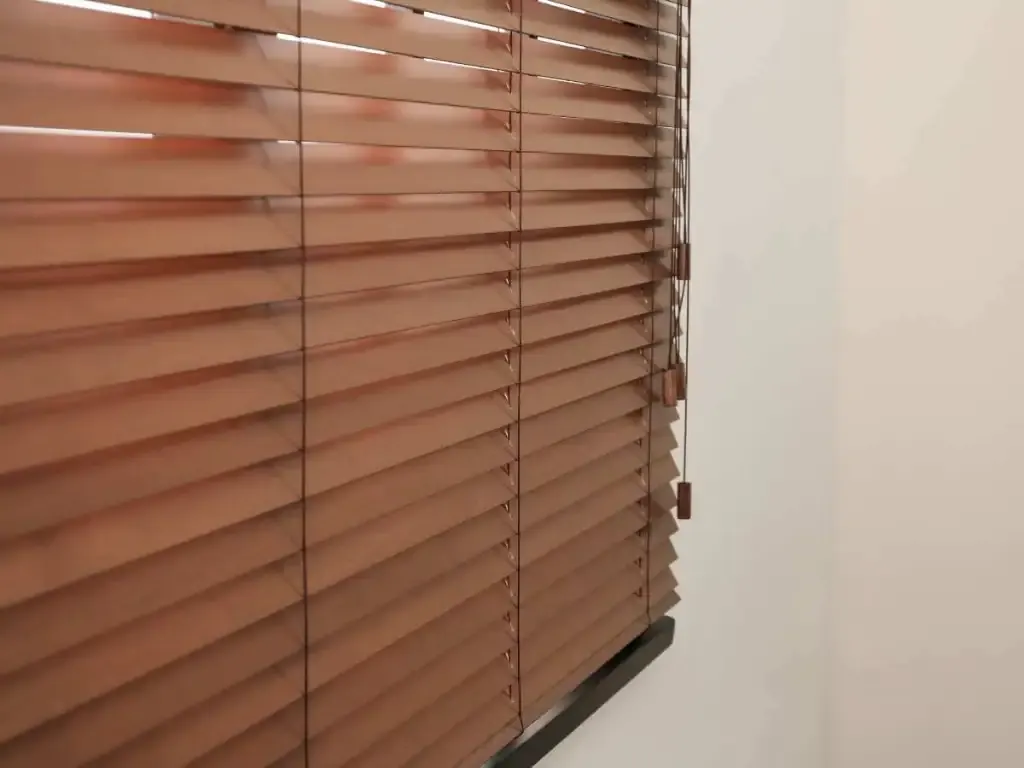 How to Childproof the Blinds You Already Have in Mooresville
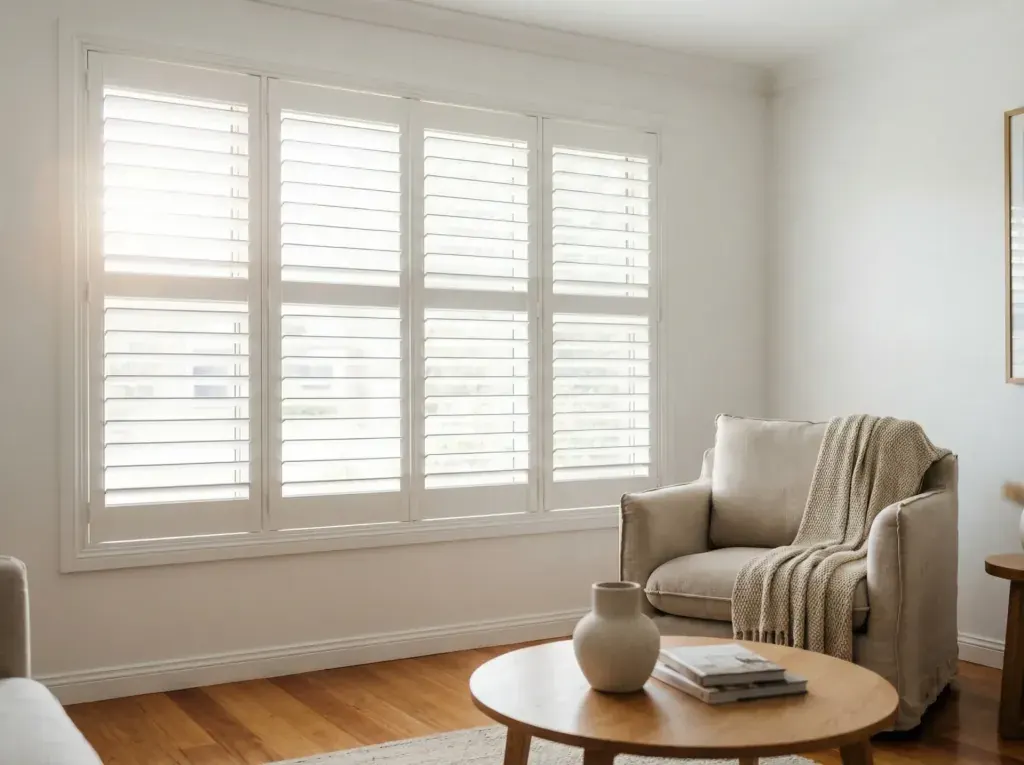 Specialty Shape Windows Cost More. Here's Why, and What You Get