Commercial Window Treatments

Commercial Window Treatments in and Around Mooresville, IN

Specified by elevation, documented opening by opening

Call (317) 999-5154Get Free Quote
Quick Answer

A quick summary before the details: this is a made-to-order product, measured in the home and built to your numbers. The answers here explain what that means for pricing, timing and what happens if something fails.

  • Service: Commercial Window Treatments for Mooresville homeowners
  • Service area: Mooresville, IN and surrounding areas
  • If a mechanism has failed rather than a whole product, that's a service call and it moves quickly since we're fitting parts rather than ordering a custom build. New orders follow the usual two to five week fabrication.
  • Insured and bonded
  • Serving Mooresville, IN since 2008
Commercial Window Treatments Services

Expert Commercial Window Treatments for Mooresville Homes

Commercial work in Mooresville splits into two different problems, often inside one building. The Mooresville Commercial Historic District holds 35 contributing buildings with fabric reaching back to about 1843, among them the Conduitt Building of 1870, the Taggart Building of 1896, the Redmen Lodge of 1904 and the Carnegie Library of 1916. At street level those are storefront display openings, usually modern frames set inside much older masonry. Above them sit upper floor openings with deep reveals, mostly offices now. One address, two specifications, two mounting conditions, and a measure that has to treat them separately.

Two disclosures for a commercial buyer. Phasing costs you consistency: fabric runs in dye lots, so a fit out done in three stages across a year shows three slightly different whites unless we reserve yardage up front, and reserving means spending before you need it. Second, building age is a poor guide to opening age here. The EF1 tornado of 8 April 2020 damaged the downtown core and collapsed a building at Indiana and Main, so openings in an 1896 storefront may have been rebuilt recently and measure nothing like the one next door. Custom lead time runs 2 to 5 weeks and none of it compresses.

When to Call

Signs You Need Commercial Window Treatments

If you notice any of these in your Mooresville home, it is worth booking a measure. None of it is urgent, and none of it fixes itself either.

Sun lands on the reception desk for two hours daily

A submittal came back asking about flame testing

Batteries in the boardroom died again last quarter

Nobody knows which vendor supplied the existing units

Chain operated shades run across a twenty foot wall

Chains take real effort to operate on tall openings

Turnover units keep needing whole new blinds

Guest rooms get complaints about morning light

Staff cover monitors with paper against afternoon glare

A tenant fit-out has openings with nothing scheduled

Our Process

How Mooresville Window Treatments Handles Commercial Window Treatments

Every job follows the same five-step process. Transparent, thorough, and done right the first time.

1

ADA reach and force checked

2

Control type set per opening

3

Approvals returned, order released

4

Punch list walked and closed

5

Removal and disposal scheduled

Real Project Photos

Commercial Window Treatments in Mooresville

Photographs from real commercial window treatments jobs completed by our crew in Mooresville and surrounding areas.
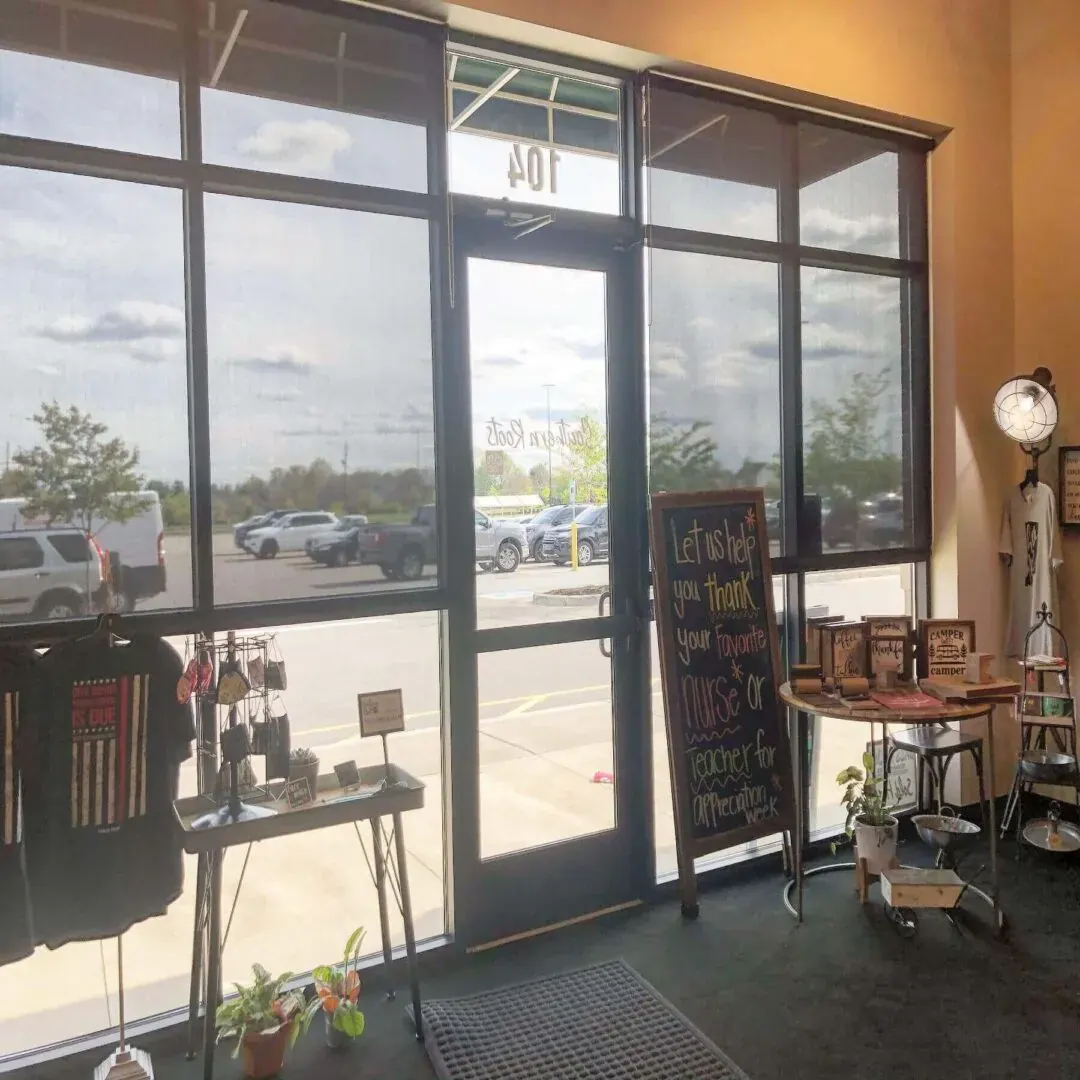
Custom shades measured and installed in Mooresville
Scope of Work

What Commercial Window Treatments Includes

Every Mooresville job is documented item by item. Here is what the crew covers.

Site walk with the facilities contact to log every opening, elevation and existing condition

Openings measured individually rather than typed off a floor plan, because as-built rarely matches drawn

Occupancy and fire requirements confirmed with the authority having jurisdiction before fabric selection

NFPA 701 flame propagation test documentation obtained and included in the submittal package

Fabric, hardware and finish samples submitted for approval before anything is released to fabrication

Control type and mounting height set against ADA section 308 reach ranges where the space requires it

Operating force checked against the ADA section 309.4 limit of five pounds on operable parts

Motorization specified wherever a manual control can't meet reach or force requirements

Openness factor selected per elevation so screens and monitors stay usable through the day

Dual roller assemblies drawn where one opening needs both glare control and darkness

Coupled tubes specified on wide spans so a run of openings reads as one continuous line

Written lead times issued with the order and updated in writing whenever the factory moves a date

Install phased around operating hours, floor by floor or wing by wing, with access arranged in advance

Elevator, loading and badge access coordinated so crews aren't working out of a corridor

Debris and packaging removed daily rather than staged in occupied space

Attic stock quantities agreed up front so a damaged unit can be swapped without a new order

Punch list walked with the owner's representative and closed out in writing

Operation, cleaning and parts information handed to facilities in a document they can actually find later

Pricing

What Commercial Window Treatments Cost in Mooresville

Commercial pricing works per opening the same way residential does. The national ranges to anchor against are roughly $250 to $2,600 per window for custom-fabricated shades and roughly $300 to $1,500 per window installed for motorized product. Those are national category ranges, not a bid for a building in Mooresville, and nobody should treat them as one. Quantity helps on a large floor plate, and fire-rated fabric, submittal work and phased after-hours access all push the other way. A property in Morgan County with a hundred identical openings prices very differently from one with forty odd shapes. Mooresville Window Treatments bids from a measured opening schedule, with the fire documentation and the control specification written into it.

By Product

How Commercial Window Treatments Differ by Product

Every product in this trade behaves differently in a room. Here is what that means for this work.

NFPA 701 tested screen fabric: Solar screen woven and tested to the NFPA 701 flame propagation standard, with the test documentation available for the submittal. This is the starting point for any occupancy where the code official asks for it in writing.

Dual roller assembly: Two shades on one bracket set, typically a solar screen in front and a room darkening fabric behind. It lets a conference room work as a daylit space in the morning and a presentation room in the afternoon.

Continuous cord loop with tensioner: The manual control that handles weight best on large commercial units. The tensioner is fastened per the manufacturer instructions, and in child-occupied spaces we look at cordless or motorized instead.

Cordless lift: No accessible operating cord at all, which is what you want in classrooms, childcare rooms and paediatric spaces. It limits practical size, so past a point the answer becomes a motor rather than a bigger spring.

Low-voltage motorization: Hardwired motors with a wall keypad, which is the durable answer in a building where nobody wants to change batteries on a schedule. The power work is done by a licensed electrical contractor as part of the trade coordination.

Battery motorization for retrofit: Where opening a finished wall isn't on the table, battery or rechargeable motors get automation into an existing space. Budget for the replacement interval, because a floor of battery shades is a recurring facilities task.

ADA-height wall keypad: A fixed control placed inside the reach ranges in ADA section 308 and operable well under the five pound force limit in 309.4. It's often the cleanest way to satisfy accessibility on an opening a chain never could.

Light-blocking pocket and side channels: A pocket at the header plus channels at the jambs, so a training room or a sleep room goes properly dark instead of dim. It's the difference between a blackout fabric and a blackout result.

Wipeable vinyl-faced fabric: A non-porous face that takes repeated cleaning without breaking down, specified in clinical areas and food service where the surface has to be wiped down as a matter of routine.

PVC vertical blinds: Still the right answer for multifamily turns and back-of-house openings. Individual vanes replace cheaply when one gets damaged, which matters far more than aesthetics when a unit turns every year.

Common Questions

Commercial Window Treatments FAQ

Questions we hear most often from Mooresville homeowners considering commercial window treatments.

As two jobs with one paperwork trail. The ground floor display opening is usually a modern frame inside an older masonry surround, so mounting depth is shallow and the shade has to look right from the sidewalk as well as from inside. The upper floor in the same building has a deep masonry reveal and often an out of true opening, since these structures run 75 to 180 years old. We spec a cassette roller downstairs for a clean street face and something more forgiving upstairs, then document each opening with its own dimensions.
Yes, if you decide early and accept the carrying cost. Reserving yardage from one lot means the mill sets aside cloth you pay for before phase two exists, and that's the only reliable way to get the same white in every window a year apart. The alternative is to phase by sightline instead of by budget: finish everything visible from the front counter in one order, then do the back offices later where a lot difference nobody can see costs nothing. We put whichever approach you pick in the written scope, listing reserved yardage phase by phase. Custom fabrication runs 2 to 5 weeks, so the phase you haven't ordered yet is not the phase you get next week.
Three percent for most retail, 5 percent if merchandise display through the window is the point. Main Street runs east to west, so the two sides of the street have opposed exposures and only one of them takes hard afternoon sun. A 3 percent mesh cuts the glare on screens and protects stock without hiding the window. Bear in mind that a solar mesh reverses after dark, so anything you want private at night needs a second layer. Fade is slowed, not stopped, with NFRC attributing 40 to 60 percent of the damage to UV.
No. IC 24-5-11 governs residential work over $150, requiring a written contract that states the total price and the dates, with the scope described in detail. A commercial fit out sits outside it. We write the same document anyway, because a commercial buyer with 40 openings across two floors needs the schedule and the per opening specification more than a homeowner does, not less. We're insured and insured, and Indiana issues no state license for this trade, so anyone claiming one for window treatments is describing something that doesn't exist.
Low, and the failures are predictable. Clutches wear on shades cycled several times a day, and chains stretch. A bracket set on an out of true wall shows up as a shade tracking to one side after a year of use. Fabric cleaning is a wipe rather than a wash. What we recommend for a Mooresville office of any size is holding two spare shades from the original dye lot in a closet, so a damaged opening gets swapped the same week instead of waiting on a 2 to 5 week fabrication.
Usually, and the lease decides the method rather than the product. Battery motors need no power runs and leave nothing behind but bracket holes, which is what most landlords will accept, though Hunter Douglas puts PowerView battery life at about one year and somebody has to own that task across a floor of shades. Hardwiring means an electrical alteration, which almost always needs written landlord consent. For a storefront on a masonry wall in the historic district, battery with a hub and a repeater is nearly always the practical answer.
It depends on the occupancy and on what your code official requires, which is why we ask before we specify. NFPA 701 covers flame propagation testing for textiles hung vertically, and assembly, healthcare, education and hospitality spaces are where it most often comes up. The part that trips projects isn't the fabric, it's the paperwork. Test documentation has to be in the submittal package, and a fabric someone believes is compliant without a document behind it will get rejected at review.
Two sections do most of the work. Section 308 sets the reach ranges for operable parts, which decides how high a chain, wand or keypad can sit and how far it can be from where somebody can get to. Section 309.4 caps the force to operate at five pounds and requires one-hand operation without tight grasping or twisting. A heavy chain on a large shade can fail that force test. When it does, the answer is usually a motor and a keypad rather than an argument.
That's the normal way we do it. Work gets phased by floor, wing or suite, with a schedule agreed in advance so nobody's meeting is happening under a ladder. Some scopes are better after hours and some are fine mid-morning in an empty conference room. We sort out badge access, elevator use and where the boxes stage before the first crew day, because the thing that actually derails a commercial install is access, not product.
Offices, healthcare, education, hospitality and multifamily, and each one changes the specification. Healthcare wants wipeable surfaces and infection control input. Education wants cordless lifts and hardware that survives teenagers. Hospitality wants blackout that genuinely works, because a guest who can't sleep leaves a review about it. Multifamily wants a product that's cheap to repair one vane at a time. Offices want glare control on the monitors. The building type usually tells us the fabric before the design conversation starts.
Custom fabrication generally runs two to five weeks, and a large commercial order with submittal review and approval on top of that runs longer. The sequence matters: samples out, approvals back, then release to fabrication, and the clock on the factory doesn't start until approval lands. We put every date in writing and we update it in writing when the factory changes it. Building a schedule around a verbal lead time is how a project ends up with bare openings at occupancy.
Three percent is the common answer on the elevations that get direct sun, with five percent where the exposure is gentler and view matters more. The test isn't how the fabric looks in a sample book, it's whether somebody can read a monitor at the worst hour of the day. We'll hang a sample on the actual elevation and let people sit under it. Getting this wrong across a floor of a Mooresville building is expensive, and it's entirely avoidable.
Yes, and we treat both as part of the scope rather than a favor. Submittals include fabric and hardware samples, cut sheets, the fire test documentation where the occupancy requires it, and a shade schedule tied to the opening numbers. At closeout, facilities gets operation and cleaning information, the fabric and hardware identification for reorders, and the attic stock count. That last one saves a lot of trouble two years later when somebody needs one shade replaced and nobody remembers the fabric.
Motorize where a manual control fails on reach, force or height, where the openings are high or behind furniture, and where the shades should move on a schedule rather than on somebody remembering. Leave manual where the openings are ordinary and reachable, because motors add cost and a maintenance obligation. The mistake we see most is motorizing a whole floor to solve a problem that exists on one elevation. Specify per opening, not per building.
They're the right answer in a retrofit where nobody's opening a finished wall, and they come with an obligation you should accept before you buy. Hunter Douglas states PowerView battery life is about one year, and commercial use with daily scheduled cycles doesn't improve on that. Multiply by the opening count and you have a recurring facilities task. Where power can be brought to the header, hardwired low-voltage motors are the better long-term call, with a licensed electrical contractor doing that part.
They get treated as one line, not as separate shades that happen to be near each other. Tubes are coupled where the spans call for it so the shades track together, and hembars are aligned so a partly lowered run doesn't look ragged from the street. On a motorized job the group is addressed to one control so nobody has to press five buttons. This is the detail that separates a commercial install that looks intentional from one that looks assembled.
A blackout fabric alone gets you dim, not dark, because light comes around the edges of any inside mount. For a room where a projected image has to hold contrast, we specify blackout fabric with a light-blocking pocket at the header and side channels at the jambs. If the room also gets used for daylit work, we run a dual roller so the screen fabric handles the everyday condition and the blackout comes down only when it's needed.
Often, and it's worth a conversation before you assume it. Bring us a shade or the original paperwork and we'll identify the fabric and hardware if it's still made. Two honest cautions: fabrics get discontinued, and fabric still in production runs in dye lots, so a new run can sit slightly off older shades on the same floor. Where the match won't hold, replacing a whole elevation at once usually looks better than patching one opening.
We are, and we insist on field measuring rather than working from the drawings. As-built openings differ from the plan more often than not, and a shade schedule built from a drawing produces a stack of product that doesn't fit and can't be returned. That means we need the openings framed and reasonably finished before we measure, which affects the schedule. We'd rather have that conversation with the general contractor early than explain a reorder later.
This is why attic stock is agreed at the start. A few spare units in the common sizes mean facilities swaps the damaged one the same week instead of waiting on a fabrication run for a single shade. Where a spare isn't available, we reorder from the shade schedule using the opening number, the fabric and the finished sizes we recorded. That record is the reason we hand over documentation rather than assuming somebody kept the packing list.
Related Services

Other Window Treatment Services in Mooresville

Mooresville Window Treatments handles the full scope of window treatment work. Explore our other services below.

Free In-Home Measure

Schedule Your Free In-Home Measure in Mooresville

Contact Information

Reach Us Directly

Our team prioritizes scheduled measures and service calls, and books in-home measures during business hours.

Office
1417 Commerce Avenue, Indianapolis, IN 46201
Hours
Mon-Fri 8a-6p
Service Area
Mooresville, IN and Surrounding Areas

Ready to Book Your Measure?

Call us to set up an in-home measure, or to ask about a treatment that has stopped working. We will talk it through on the phone first.

Service area

Serving Mooresville and the surrounding area

Call NowGet Quote