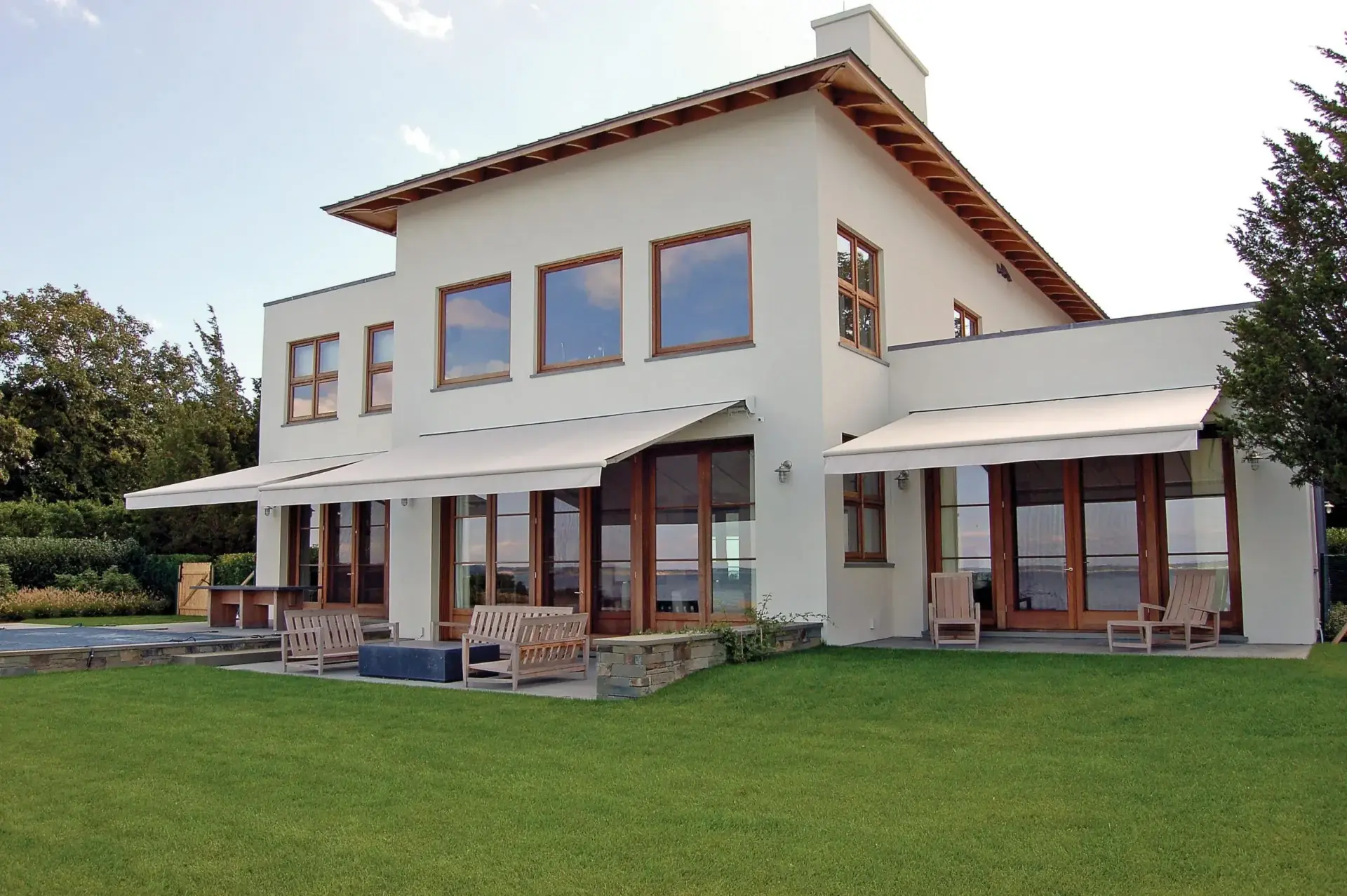
Window Treatment Crews in Mooresville Commercial Historic District, Mooresville, IN
Custom Mooresville window treatment crews serving Mooresville Commercial Historic District homeowners with free in-home measure, repair, replacement.
This part of Mooresville has its own patterns, from lot orientation to how close the houses sit to the street. Both affect privacy and glare, and the answers below take that into account.
- Services: faux wood blinds, wood blinds, vertical blinds, aluminum mini blinds
- Service area: Mooresville Commercial Historic District, Mooresville, IN and surrounding areas Nothing in this trade is an urgent call-out, so here's the real timeline. Measures get scheduled promptly at a time that suits you. Custom fabrication then runs roughly two to five weeks. Installation is a morning or a day.
- Insured and bonded
- Serving Mooresville, IN since 2008
Local Window Treatment Experience in Mooresville Commercial Historic District
Start from the date on the parapet and you'll get the wrong answer. On 8 April 2020 an EF1 tornado with winds around 100 mph came through downtown Mooresville and collapsed a building at Indiana and Main. Glass across the commercial core has been repaired or renewed since, so the 1896 on the Taggart Building and the 1904 on the Redmen Lodge Building tell you very little about what is actually sitting in the opening today. That isn't a small caveat in a district of 35 contributing buildings. It means mounting depth gets measured opening by opening, on every floor, before anything is ordered.</p><p style="font-size:16px;color:#4a5a6a;line-height:1.75;margin:16px 0 0">The second thing to understand is that one building gives you two opposite problems. At grade, the storefront frames are typically newer units set inside much older masonry openings, shallow, with very little flat surface to hold a mounting bracket. Go upstairs and the load bearing masonry gives the deepest reveals anywhere in Mooresville, deeper than anything in Highland Meadows or the new plans at Grand Oaks. That's a genuine inside mount with room for a 2 inch louver. Same address, same afternoon, two completely different specifications, which we write as separate lines on one work order.
We have served Mooresville Commercial Historic District homeowners through the full range of window treatment needs, from inspections and repairs to full replacements. Whatever the system, our Mooresville crew approaches every project with clear communication and respect for your property.
Thirty five contributing buildings on Main and Indiana Streets
This is a commercial and mixed use district rather than a residential one. The count that exists is 35 contributing buildings and one contributing object, and the residential component sits upstairs as apartments and offices over ground floor retail instead of as detached houses. Lots follow the original 1824 and 1825 town plat, 20 acres divided into parcels of 16 lots, fronting straight onto brick sidewalks with no setback. No price band applies to a district like this. Upper floor unit sizes aren't published anywhere we could reach, so square footage downtown gets measured rather than quoted. The town wide figures are what exist: a $206,400 median owner occupied home value and a $68,983 median household income.
No single developer built any of this. The district went up over about 80 years of incremental work by individual owners and local builders, which is why an Italianate front can sit beside Gothic Revival, Classical Revival, Commercial Style and Craftsman work rather than repeating one elevation. Compare that with Grand Oaks, where Taylor Morrison and Pyatt Builders repeat a handful of plans. Downtown, two adjacent buildings can be fifty years and two styles apart, and the openings prove it at the party wall: head heights change, reveal depths change, head shapes go from square to segmental to arched. Worth knowing too that Mooresville has no residential historic district at all, unlike Shelbyville and Greenwood, so the old houses around the core carry no designation and no documentation.
Display glass at grade, deep masonry reveals overhead
Count these buildings by floor, because the floors behave differently. At grade you're looking at a full width display bay with a transom band over it, which puts the heat and the merchandise on the same elevation. Above it sit regular upper floor openings, and on the Italianate and Gothic Revival fronts those heads go arched or segmental rather than square. The Craftsman influenced structures in the district add deep front porches, and a porch that deep changes the openness answer for the glass behind it, because the load arriving at that window has already been cut before it gets there. None of this is residential in the ordinary sense, so a room by room count doesn't apply.
Then there's age and movement. These are masonry buildings between roughly 75 and 180 years old, and the district took an EF1 tornado in April 2020. An opening that old measures differently at the head than at the sill, and nothing repeats, not even along one front. So a three point measure on width and a three point measure on height are the floor here, with head shape recorded separately per opening, because a shaped panel or an arch mounted rod is a different order line from a rectangle. We build to the smallest of the three numbers. Copying the dimension from the opening next door is how a $900 shade ends up in a closet.
Main runs east and west, so the two sides never match
East and West Main Street run cardinal east to west, so the buildings on its two sides hold opposed north and south exposures and never take the same load. North and South Indiana Street faces east and west instead, putting afternoon sun on the west facing glass. We spec 3 percent openness there and 5 percent on a north facing Main Street front. NFRC attributes 40 to 60 percent of fading to UV, so a solar shade slows fade on displayed goods rather than stopping it.
A storefront frame at grade has nothing to hold a bracket
Ground floor fronts in the district are usually newer frames set inside much older masonry openings, which leaves a shallow profile and almost no flat surface for an inside mount. The shade goes outside the opening, fixed to the header or the transom band, with real overlap at each side to control the light gap. One detail settles at the measure rather than later: a reverse roll won't work behind a fascia, so you're choosing between fabric close to the glass and a closed top.
The deepest mounting depth in Mooresville is on the second floor
Load bearing masonry upstairs gives more usable depth than any wall return in Highland Meadows or Grand Oaks. A 2 inch louver or an L-frame shutter panel sits fully inside the reveal and reads flush. The factory deduction is still 1/16 inch per side, and Lutron publishes 3/4 inch per side on Roller 20/64, so a light gap remains. On an upper floor opening with a head above 80 inches that gap runs a long way, and a light blocking pocket at the head is the fix.
The 2020 tornado broke the link between building age and window age
An EF1 with winds near 100 mph collapsed a building at Indiana and Main on 8 April 2020, and glass through the commercial core has been repaired or renewed since. So the 1870 on the Conduitt Building and the 1916 on the Mooresville Carnegie Library are dates for the masonry, not for what sits in the opening. Depth, squareness and head shape all get taken fresh at every opening rather than inferred from the front of the building.
What we specify for a building in the Mooresville Commercial Historic District
A building in this district is really two jobs at one address: a display level that sells with light, and upper floors that are offices or apartments needing privacy after dark. We quote them separately. Pricing has to come from national ranges, because no published window covering pricing for Mooresville was located at all: custom treatments $250 to $2,600 per window, shutters $175 to $800, drapery $300 to $4,000, retractable awnings $1,000 to $6,000 installed. Custom fabrication runs 2 to 5 weeks from the approved order. The Indiana Home Improvement Contract Act (IC 24-5-11) requires a written contract with scope, dates and total price on residential work over $150, and we're insured and insured.
Exterior solar shades and retractable awnings
The most effective place to stop heat on a South Indiana Street front is outside the glass, before it arrives. An exterior solar shade or a retractable awning cuts the afternoon load on a display bay without darkening the interior the way an interior blackout would. National installed pricing on awnings runs $1,000 to $6,000. Anchoring into masonry between 75 and 180 years old means the fixing points get checked before an order goes in, not after.
Solar roller shades with a fascia
For the display bay itself, a solar roller on an outside mount, fixed to the header with a fascia closing the top, is the workhorse downtown. Openness runs by elevation rather than by building: 3 percent on the west facing Indiana Street glass, 5 percent on a north facing Main Street front that never takes direct sun. Settle roll direction at the measure, since a reverse roll and a fascia don't go together.
Composite plantation shutters with an L-frame
Upstairs, where the masonry reveal is deep and reasonably true, an L-frame composite panel sits inside the opening and reads like part of the building. Composite rather than hardwood, because upper floor units over retail see heat and humidity swings that move wood. On a tall narrow opening we'll add a divider rail so the top and bottom louvers work independently, which matters in an office where the desk sits at the window.
Custom drapery on a traverse rod
For the apartments and offices above the storefronts, drapery does what a hard treatment can't on an out of square masonry opening: it hangs plumb regardless of what the opening is doing. A traverse rod mounted above the head, with enough return to close against the wall and a proper overlap at the center, handles a head above 80 inches cleanly. National drapery pricing runs $300 to $4,000 per window, and fullness and yardage drive most of that.
Main and Indiana Streets
The district holds the crossing of Main and Indiana Streets in Brown Township, Morgan County, between White Lick Creek and its East Fork. The Conduitt Building dates to 1870, the Taggart Building to 1896, the Redmen Lodge Building to 1904 and the Mooresville Carnegie Library to 1916. Two more National Register listings sit close by: the Friends Academy Building of 1861, now a history museum, and the Mooresville Gymnasium. Brick sidewalks run the length of the core. Newby Memorial Elementary and Northwood Elementary serve the area, feeding Paul Hadley Middle School, named for the Mooresville watercolorist who designed Indiana's state flag in 1916, and then Mooresville High School.
Design review downtown: what the National Register listing actually requires
Nothing restricts you, on the evidence available. No mandatory design review over private property was identified for the Mooresville Commercial Historic District, and National Register listing on its own doesn't control what a private owner does with private money. No local preservation ordinance for Mooresville was located, and no district level rule on window coverings was found either. Here's the caveat we'd rather state than bury: that's an unconfirmed absence, not a proven one. Mooresville's own 2023 planning document returns 'Category is not correct' instead of opening, and the 2009 version does the same, so the town's language about its districts couldn't be read. Confirm with the town before an awning goes onto a Main Street front.
Window Treatment Services in Mooresville Commercial Historic District
Every service Mooresville Window Treatments offers across Mooresville is available to Mooresville Commercial Historic District homeowners.
Faux Wood Blinds in Mooresville Commercial Historic District
The slat that ignores a Morgan County August
Learn more →Wood Blinds in Mooresville Commercial Historic District
Basswood where the casing earns it
Learn more →Vertical Blinds in Mooresville Commercial Historic District
The wide door answer that still works
Learn more →Aluminum Mini Blinds in Mooresville Commercial Historic District
For the rooms nobody photographs
Learn more →Roller Shades in Mooresville Commercial Historic District
One tube, no clutter, honest light gaps
Learn more →Solar Shades in Mooresville Commercial Historic District
Keep the water view, lose the glare
Learn more →Cellular Shades in Mooresville Commercial Historic District
The shade with real test data behind it
Learn more →Zebra Shades in Mooresville Commercial Historic District
View and privacy on one tube, with limits
Learn more →Roman Shades in Mooresville Commercial Historic District
Fabric that folds, with the stack accounted for
Learn more →Woven Wood Shades in Mooresville Commercial Historic District
Natural weave for a town with real canopy
Learn more →Blackout Shades in Mooresville Commercial Historic District
Dark enough to sleep, honest about the edges
Learn more →Plantation Shutters in Mooresville Commercial Historic District
Millwork for windows, built to the opening you have
Learn more →Cafe Shutters in Mooresville Commercial Historic District
Privacy at eye level, daylight over the top
Learn more →Motorized Shades in Mooresville Commercial Historic District
Power for the windows you can't reach
Learn more →Custom Drapery in Mooresville Commercial Historic District
Panels sewn to the room, hemmed after they hang
Learn more →Valances & Top Treatments in Mooresville Commercial Historic District
The finish over the headrail, honest about the rest
Learn more →Exterior Solar Shades in Mooresville Commercial Historic District
Stop the heat outside the glass
Learn more →Retractable Awnings in Mooresville Commercial Historic District
Shade you can put away before the wind arrives
Learn more →Commercial Window Treatments in Mooresville Commercial Historic District
Specified by elevation, documented opening by opening
Learn more →Skylight Shades in Mooresville Commercial Historic District
Overhead fabric in a town of ranch ceilings
Learn more →Sliding Glass Door Blinds in Mooresville Commercial Historic District
The stack parks where the door doesn't
Learn more →Panel Track Blinds in Mooresville Commercial Historic District
Wide panels that park exactly where you said
Learn more →Sheer Shades in Mooresville Commercial Historic District
Fabric vanes that spread the light, not blackout
Learn more →Pleated Shades in Mooresville Commercial Historic District
One creased layer, priced and explained honestly
Learn more →Bamboo Shades in Mooresville Commercial Historic District
Woven grass for the rooms with a view worth keeping
Learn more →Dual Shades in Mooresville Commercial Historic District
Two fabrics on one bracket, set dead level
Learn more →Top-Down Bottom-Up Shades in Mooresville Commercial Historic District
Daylight over the top, the street shut out below
Learn more →Cordless Blinds in Mooresville Commercial Historic District
No loop on the wall, and a spring that ages
Learn more →Hardwood Shutters in Mooresville Commercial Historic District
Real wood, in the rooms that won't fight it
Learn more →Composite Shutters in Mooresville Commercial Historic District
Poly panels, sized around the divider rail
Learn more →Smart Home Shade Integration in Mooresville Commercial Historic District
Protocols and range, and what outlives the hub
Learn more →Blind Repair & Restring in Mooresville Commercial Historic District
Fixed where it's honest, replaced where it isn't
Learn more →Shutter Repair in Mooresville Commercial Historic District
Confirm the match before anyone schedules a panel
Learn more →Motorization Retrofit in Mooresville Commercial Historic District
Some headrails take a motor, plenty don't
Learn more →Outdoor Patio Shades in Mooresville Commercial Historic District
Porch drops anchored into structure, not into trim
Learn more →Office Window Treatments in Mooresville Commercial Historic District
Specified by elevation, controlled within reach
Learn more →Healthcare Window Treatments in Mooresville Commercial Historic District
Cordless, cleanable, documented for the submittal
Learn more →Multifamily Window Treatments in Mooresville Commercial Historic District
One spec per plan, and a lot you can reorder
Learn more →A Local Radius Around Mooresville
Mooresville Commercial Historic District is one of several Mooresville communities we serve. We measure and install across Mooresville, Morgan County, and surrounding areas.
Mooresville Commercial Historic District Window Treatment FAQ
Questions we hear most often from Mooresville Commercial Historic District homeowners.
Free Assessment in Mooresville Commercial Historic District
Schedule a free, no-obligation window covering inspection. We respond promptly to all Mooresville Commercial Historic District inquiries.