Why Mooresville Rooms Feel Cold Even With the Heat Running
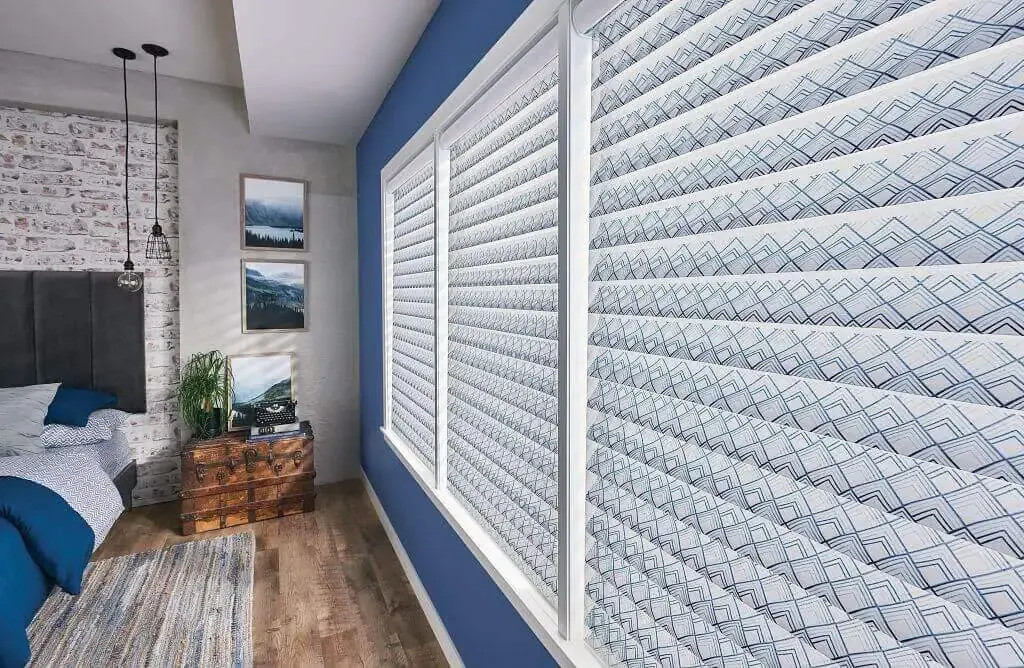
Budgeting for window treatments in an older Mooresville home means figuring out where the coldest rooms actually are before deciding what to spend where.
Why Older Windows Feel Colder Than the Thermostat Says
Most people assume a cold spot near a window means air is leaking in somewhere, and sometimes that's true. But plenty of Mooresville homeowners have a tight, well-sealed window that still feels cold to sit near, and the reason is simpler than a leak: the glass surface itself is cold, and a body loses heat to a cold surface by radiating toward it, regardless of whether the air around it is moving.
Add to that a convective loop. Air against the glass cools and sinks, then spreads out along the floor in front of the window, which reads as a draft even when the frame is sound. Single-pane and early double-pane windows, both still common across older Mooresville housing stock, have a lower insulating value than current glass, so this effect is stronger on them. None of it shows up on a thermostat, which only measures air temperature at one point in the room.
What Window Treatments Can and Can't Fix
It's worth saying plainly: no shade or drapery, at any price, replaces a window with a genuinely failed seal or a warped frame. Weatherstripping and air sealing are a separate, usually less expensive project, and doing that first on the worst offenders sometimes changes what a room actually needs from its treatments afterward.
Full window replacement sits at the far end of the cost range and solves the glass problem directly, but it's a much bigger investment than treatments and not always necessary right away. For a lot of Mooresville homes, a combination, minor air sealing where it's cheap to do, then treatments sized to the room, covers the comfort problem without the largest expense on the list. It's worth pricing that combination out before jumping straight to the most expensive option on paper.
The honest way to find out whether shades will help a specific room is to have someone measure it and look at the window itself, not guess from a product page, and a free in-home measure covers exactly that.
How Cellular Shades Trap Air Instead of Just Blocking Light
A cellular shade is built from pleated fabric folded into rows of hexagonal pockets, and it's those pockets, not the fabric itself, that do the insulating work. Air trapped inside a small enclosed cell doesn't move much, and still air is a poor conductor of heat, so the shade acts as a buffer zone between the room and the cold glass behind it.
Cell size varies by product line, usually somewhere between 3/8 inch and 1 inch, and shades come in single-cell or double-cell construction. Double-cell fabric has two rows of pockets stacked front to back instead of one, adding another layer of dead air. Manufacturers publish R-values for these products, and single-cell fabrics typically land around R-1.5 to R-2, with double-cell more like R-3 to R-3.5. That's the insulating value of the shade itself, added on top of whatever the window already provides.
None of that is a promise about a heating bill. It's a description of how the product is built and why it behaves differently than a roller shade or a flat fabric panel, neither of which has any air pocket at all.
Layering Shades and Drapery for the Coldest Rooms
Plenty of Mooresville homeowners already do a version of this without thinking about it: sheers for summer, heavier panels that come out for winter. Formalizing that into a real layered setup, a cellular shade underneath with lined drapery over it, does more for a genuinely cold room than either piece alone, especially in a room people actually sit in during the evening, like a living room with a big west-facing window or a primary bedroom.
The drapery needs to close all the way over the opening at night to do anything useful. A narrow panel that only covers the middle of the window and leaves both sides of the glass exposed looks nice folded open but isn't doing much when it matters most.
Mount Style and Fit Change How Much Draft Gets Through
A shade that doesn't fit right gives away most of whatever it was bought for. Say an inside mount leaves a half-inch gap on each side because the measurement was sloppy; that's a half-inch of open path for cold air rolling off the glass to spill straight past the shade and into the room. It happens more often than anyone likes to admit, usually from a rushed measure or a shade ordered off a size chart instead of the actual opening.
Outside mount sidesteps a lot of that risk since it overlaps the frame instead of trying to fit inside it exactly. On an old, slightly out-of-square Mooresville opening, that's usually the smarter call, even if it means a slightly larger shade than the window technically requires. Side channels close what's left. Skip them on a bad window and don't be surprised the shade underperforms.
Frequently Asked Questions
What R-value should I expect from a cellular shade?
Manufacturers typically publish figures around R-1.5 to R-2 for single-cell fabric and R-3 to R-3.5 for double-cell. That's the insulating value of the shade itself, added to whatever the window already provides. It's not a promise about a specific change in a heating bill, just a description of how the product is built.
Does drapery over a shade actually help, or is it mostly decorative?
Both, but the functional part is real. A lined panel adds another layer of still air between the room and the window, and it only helps with comfort if it actually closes over the full opening at night. A narrow panel that stays open most of the way isn't doing much beyond looking good.
Are side channels on cellular shades worth the extra cost?
On a room that's noticeably cold, generally yes. They close the gap along the sides of the shade where it would otherwise leave the edge of the glass exposed. On a room that's already comfortable, they're a smaller priority and easier to skip.
 What a Proper Measure Catches Before You Buy in Mooresville
 How to Childproof the Blinds You Already Have in Mooresville